Listen to this post NOW on Beyond Everything Radio!
“This figure of speech Jesus used with them, but they did not understand what he was saying to them.” (John 10:6)
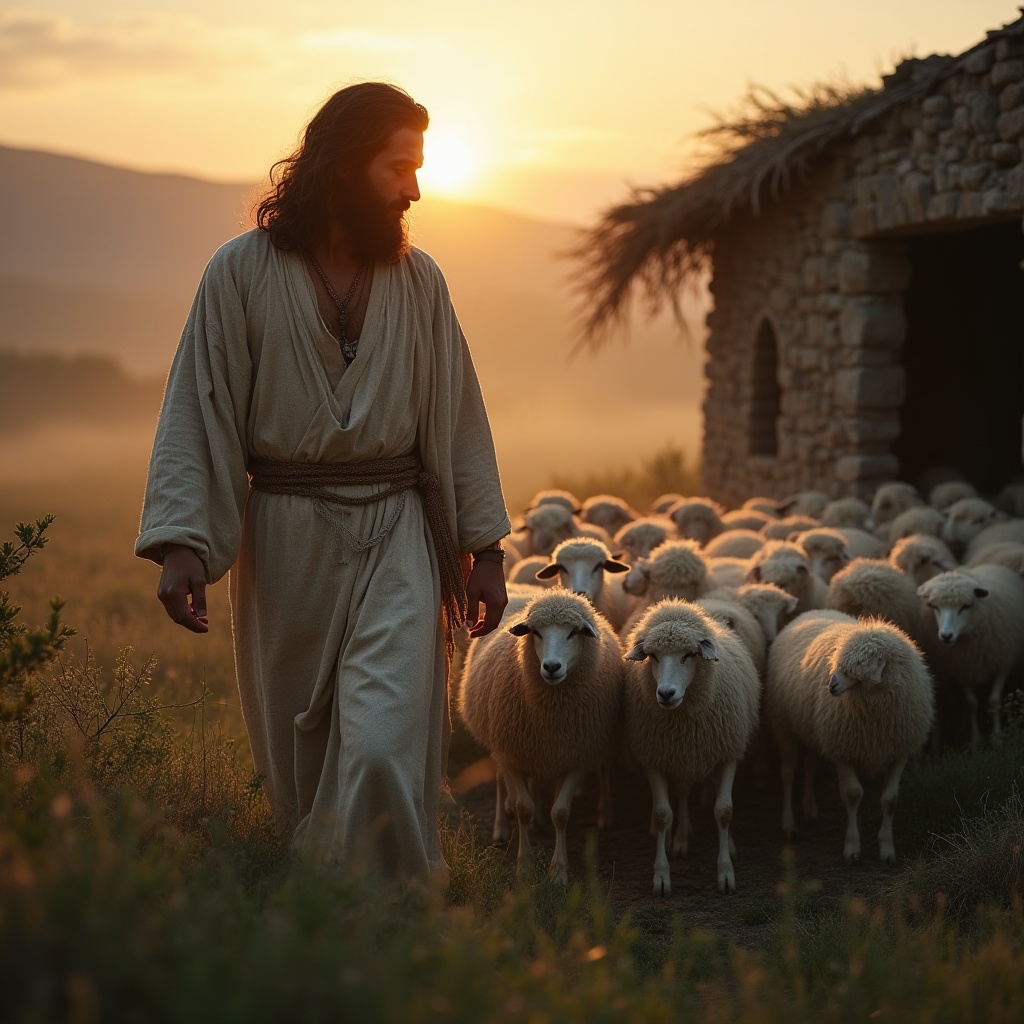
Confusion has plagued Jesus’ hearers throughout this whole series. I started with verse 6 because we too will not understand Jesus until the exact moment He gives us ears to hear and spiritual eyes to see. From the time we are in children’s ministry, we make little Shepherd Jesus’ out of tongue depressors, with cotton ball sheep complete with googlie eyes that our parents rediscover months later when vacuuming the car. Jesus loving cute little ewe lambs is as ubiquitous as the song: “Jesus loves me.” And I’m afraid that’s about as far as most of us go.
This programming makes it harder to hear Jesus’ words, so let’s test your programming. Consider this passage:
“Truly, truly, I say to you, he who does not enter the sheepfold by the door but climbs in by another way, that man is a thief and a robber. 2 But he who enters by the door is the shepherd of the sheep. 3 To him the gatekeeper opens. The sheep hear his voice, and he calls his own sheep by name and leads them out. 4 When he has brought out all his own, he goes before them, and the sheep follow him, for they know his voice.” (John 10: 1-4)
Where did your programming take you? Did you focus on the thief? Was it Satan? What’s valuable in sheep pen? Is it about Satan trying to steal the sheep? Is the Devil going to get you? Or did you focus on the special sheep who belong to the gatekeeper? Did you insert a distinction between those sheep that know the voice and those who don’t? If so, what part speaks of those who don’t know his voice? It’s not there…go check. Or did you focus on getting sheep into the pen, equating it with getting people to heaven when they die? If so, textually how did you get there?
I’m sure your conditioning was just like mine…and that’s the problem. All parables are about the Kingdom of God (here and now)Textually, this teaching is about divine union with God and as I’ll show you, true salvation. Jesus’ role in connecting us to God, has nothing to do with converting to a religion, it has no emphasis on sin, but Jesus’ salvation is a free and full life here an n. Can you see how tradition sneaks in and obscures the message?
Jesus continues:
“Truly, truly, I say to you, I am the door of the sheep. 8 All who came before me are thieves and robbers, but the sheep did not listen to them. 9 I am the door. If anyone enters by me, he will be saved and will go in and out and find pasture. 10 The thief comes only to steal and kill and destroy. I came that they may have life and have it abundantly. 11 I am the good shepherd. The good shepherd lays down his life for the sheep.” (v. 7-11)
- The “Sheep Fold” refers to “interior dwelling”. Sheep were corralled at night for protection. This is our shared Divine union with God, our spiritual existence now, the Kingdom of God here, not “one-day-when-we-die heaven.”
- “His own” (ta idia-plural of one’s very self, peculiar or individual possession). The distinguishing is between the peculiar uniqueness of each “self” which (all) belong to God. That true “interior” part cannot hear (doesn’t know) the foreign voice. The Greek would render this “the sheep of him” if it were creating a distinction between sheep. Since “sheep” follows “peculiar,” it’s reasonable to assume all the peculiar sheep belong to him…no distinction.
- Salvation is entering “eisersome”-(entering, begin to experience, awakening to the Presence/present) union with God. Salvation then frees us to follow the Shepherd in & out to pasture.
- I believe Jesus is revealing this “interiority” to be our inner sacred space, our mind and contemplation, which is constantly under attack by intruding thoughts, emotions, and sense perceptions by “climbing up elsewhere.” In Christ, we can sit still and “be peculiar” in God, freeing our mind and liberating this life.
- The Good Shepherd, sacrifices Himself for all sheep. Yes, some wander off, but there is another parable for that. Would Jesus be good if his sacrifice was only for a few?
- All who came before are thieves and robbers. Prior to awakening, your mind is hopelessly plundered, attacked, by “(all) everything”.
- Once gathered, we are led out of the pen into pasture.
Would Jesus be good if his sacrifice was only for a few? I know why Reformed believers hold to this view, but let me ask you, is that really in this text. Jesus is teaching that the “true self” that “peculiar individual existence” of all people belongs to him, and that interior part truly does know his voice. The false, surface self is intruded upon by countless thieves climbing into our inner sanctity by other means. The spirituality offered by “hired hands” let the wolves into our pen meaning that true soul care is contemplation.
If your stuck on the distinction between sheep who are in this pen, and those wandering, Jesus addresses this:
“And I have other sheep that are not of this fold. I must bring them also, and they will listen to my voice. So there will be one flock, one shepherd.” (v.16)
Has the text itself challenged your programming? Our formative beliefs aren’t completely wrong, but scripture reveals a more expansive way to re-discover Jesus’ teaching. Which do you ultimately want: Jesus’ teaching or man’s doctrine?
If your life today isn’t the experience of freedom, going into interior safety and then venturing from that safety into the world of pasture, then your inner sanctity has been highjacked, stolen, and your true peculiar existence remains unknown. A surface level life (even a religious one) is another pseudonym. The hired hands have given us a deficient life of constantly reacting to our emotions, our sense perceptions, and becoming ensnared by the captivity of our thoughts. Most of our world knows nothing of inner peace or freedom. We distract, medicate, anesthetize, and scroll. We are devoured.
Jesus’ salvation is to awaken to who we are in God, it is not conversion to religion. Salvation is discovering who or what is left of us if our past and future did not exist…because they don’t and never have. As James Finley says, all that exists is the Presence of God, “presencing” itself, as the present moment. Christ is the door, the Good Shepherd, who has laid down his life in order to lead into our lives, so we can redeem and restore them, not help us evacuate them.
So, are we like Jesus’ hearers still not understanding? If so, our confusion is only temporary. At some point, we all hear his voice calling our peculiar name, from another pen.
 Thrive in Exile