Listen to this post NOW on Beyond Everything Radio!
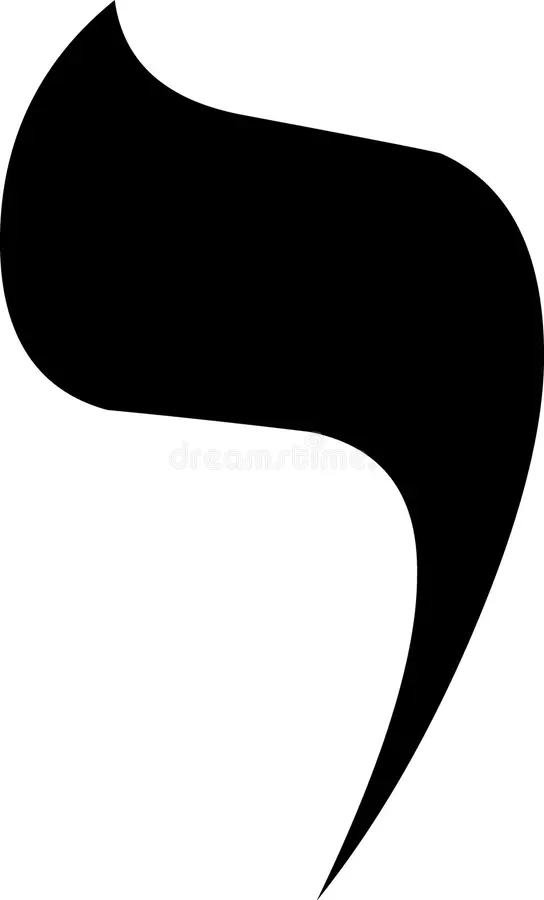
Yodh (pronounced Yěud or Yǔd) is the tenth letter in the Hebrew alphabet and therefore the tenth stanza (containing 8 verses) in Psalm 119. The Yodh is smallest letter in Hebrew alphabet and scholars say it symbolizes an arm or hand, in fact, the “Jod” was transliterated as “jot” when Jesus referred to the smallest part of the Law of God (Matthew 5:18). This symbolism of being small (humble) or a hand captures not only the entire sentiments of the 119th Psalm, but is also a fitting place to launch this next section.
73 Your hands have made and fashioned me;
give me understanding that I may learn your commandments.
The Psalmist captures a powerful worldview of humility as he considers that he is a creation of God (עָשׂוּנִי– they “hands” made and are establishing me) and from this place he asks to be granted understanding to go along with God’s work of establishing/making him. From this we receive the insight that the creative work of God is not complete with our birth, but that our entire life is the creative, establishing effect of God as we gain understanding and learn His commandments (instruction). God is continually establishing us.
74 Those who fear you shall see me and rejoice,
because I have hoped in your word.
The process of being made or established takes place as we place our hope in God’s word, voice, and commands. It’s the trust that we are being made real in God. There are others who also share in this awe of God forming them in the same way, it is these that shall see this transformation and it will bring them tremendous joy. I would assume this is because if we can see God establishing another, then we can be confident it will be our experience as well.
75 I know, O Lord, that your rules are righteous,
and that in faithfulness you have afflicted me.
76 Let your steadfast love comfort me
according to your promise to your servant.
77 Let your mercy come to me, that I may live;
for your law is my delight.
These three verses develop this worldview as a creation further by tying together the experience of affliction with comfort and mercy. Without God, we see these as polar opposites. Behind these words we can see that the Psalmist has already resolved the bigger existential questions about his own suffering and struggle. There’s a spiritual maturity there. He trusts completely that God is doing what is right and acting in accordance with faithfulness. He rightly connects the relationship between God’s rules, promise and law with God’s faithfulness, steadfast love, and mercy.
How much would we grow it we were to integrate what seems like opposing forces? In other words, God shows us his righteous rules by faithfully afflicting us. He shows his steadfast love, by promising it to us, and He shows his mercy to us by way of His law.
78 Let the insolent be put to shame,
because they have wronged me with falsehood;
as for me, I will meditate on your precepts.
The psalmist asks that the insolent or proud would be ashamed for how they have wronged him. This reflects the worldview that God is working faithfully in the affliction and struggles not only on the side of the Psalmist who “meditates on God’s precepts” but also on the insolent who don’t. Perhaps their shame is how God will lead the proud into humility. This transitions so nicely to those surrounding him who do hold reverence for God. The Psalmist asks God that these will look at his life and learn the testimonies of the Lord.
This worldview is highly conscientious of not only his own life, but how it affects and is affected by those around him. He possesses both an internal as well as external field of view, a vertical plane as well as the horizontal. He seeks to live humble and small (Yodh), to have his heart blameless and asks not to be shamed or marginalized as those who forget God’s statues.
79 Let those who fear you turn to me,
that they may know your testimonies.
80 May my heart be blameless in your statutes,
that I may not be put to shame!
May we all pray such prayers for humility. May we all ask God for the heart that loves and seeks to live according to God’s word.
 Thrive in Exile