Listen to this post NOW on Beyond Everything Radio!
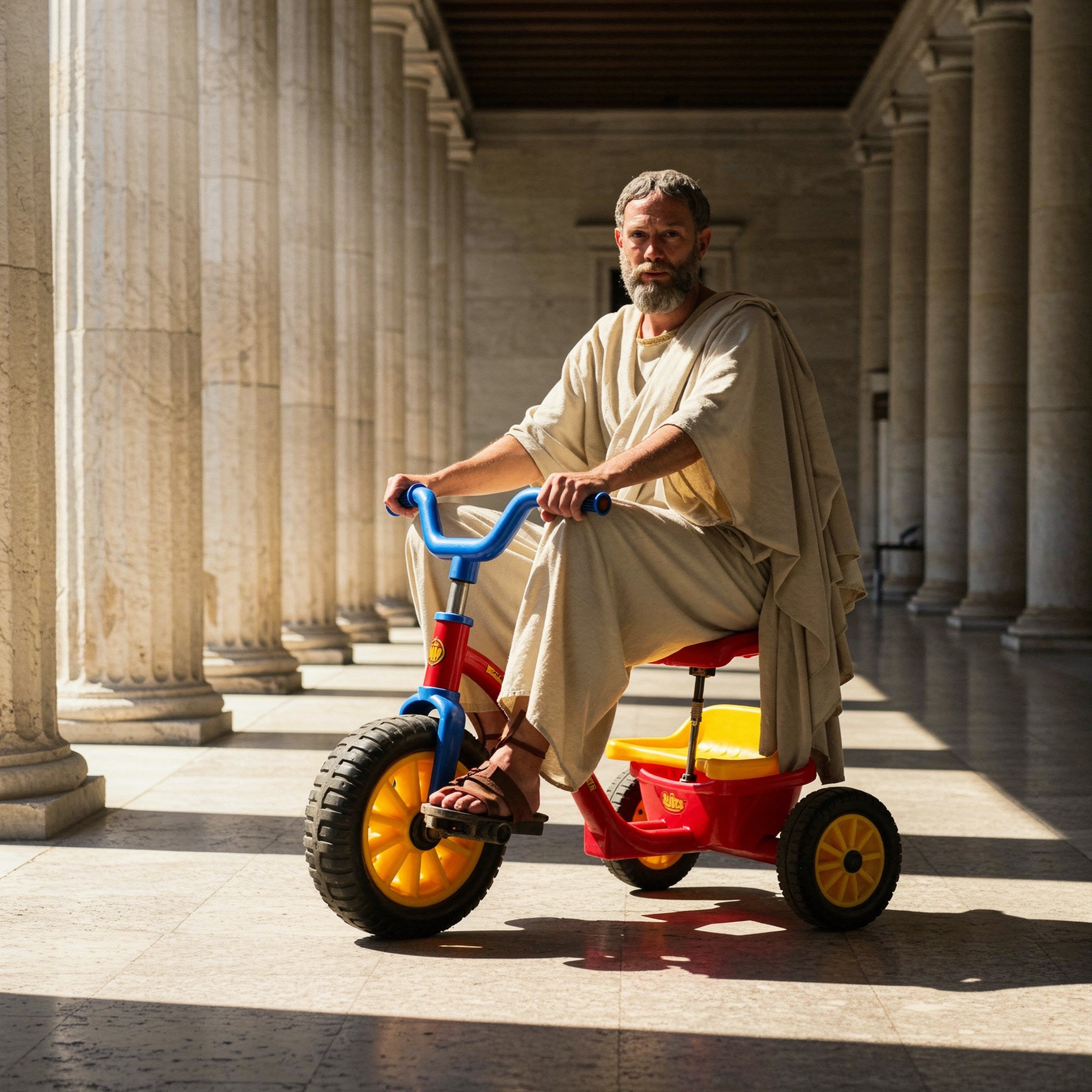
“Then Pilate said to him, “So you are a king?” Jesus answered, “You say that I am a king. For this purpose I was born and for this purpose I have come into the world—to bear witness to the truth. Everyone who is of the truth listens to my voice.” Pilate said to him, “What is truth?” (John 18:37-38)
“What is truth?” Pilate’s question is the biggest question we will ask in our lives. How we answer it has far reaching ramifications to our quality and experience of life.
Our relativistic world assumes we all have our own truth: “What’s true for you isn’t true for me” or “That’s your truth…” Truth is constantly being argued from the tiny binary silos of our lives. Politics displays precisely how we lay hold of a small piece of truth and then extrapolate it to assume we possess all that is true. Since no one possess all truth, we are each our best day only a partial believer in the truth.
My goal today is to unlock the healing power of THE TRUTH, which is not internal and subjective (although it is experienced that way), but is external and objective. Truth transforms our lives in unassuming ways. THE TRUTH is both taught AND caught, and I share this framework so we may understand ourselves and each other.
The BIG WHEEL.

The Living School introduced me to the metaphor of the Big Wheel. I found it helpful but also incomplete. Like me, you may need to tweak the metaphor for yourself.
We live and move according to the truth we possess and we cannot live better than we think. Truth is our Big Wheel we ride through life. There is one large wheel which represents our predominant authority or source of truth. There are two smaller wheels which represent equal and necessary sources of authority upon which our grasp of truth balances. The three most universal sources of authority are:
- Scripture or Sacred Text
- Tradition
- Experience
This is surprisingly universal once understood. An Atheist may not subscribe to the Bible, Quran, Ghita or Torah, but they will ascribe authority for living to scientific journals or study authors. Once we see this, the next thing to understand is how we prioritize these sources.
A protestant Christian will place the Bible as the big wheel, and put tradition and experience as the two small wheels. A Catholic or Mormon is more likely to place Tradition or the Church as the big authoritative wheel and leave the text and experience as the small wheels. Others may prioritize experience over text and tradition.
Back to Jesus’ quote. “Everyone who is of the truth listens to my voice.” Jesus can only make this claim if he’s more than just a man. This statement is cosmic in scale, and fitting because his claim is that he is the anointed one (Messiah or Christ) from Hebrew scripture. This reaches out to all human existence including the atheistic scientists who explore our cosmos.
“For by him all things were created, in heaven and on earth, visible and invisible, whether thrones or dominions or rulers or authorities—all things were created through him and for him.” (Colossians 1:17)
Jesus’ claims that He himself “IS” the Truth..“I am the way, the truth, and the life…” (John 14:6)
I’m convinced the voice (word, teachings) of Christ Jesus is our greatest authority for all our lives, though not everyone shares this discovery. I’ve undertaken the task of understanding what has been said, how it was said, what it means, along with the context surrounding it all. The voice of Christ lovingly warns us about the world’s many authorities who want to be the big wheel (i.e. institutional power) of our life. Whereas all of life’s authorities force their will upon us, Christ invites us, in love, to trust or follow Him.

Side Note: Personally, I’ve turned my big wheel into a mullet style mountain bike. I have the big wheel of scripture up front, and a slightly smaller wheel of experience in back. In my view, tradition is completely a matter of personal preference and it carries no actual authority, just the illusion of authority.
One way to test this is the Bible’s meta-narrative framework of the Garden, Curse & City. Others talk about this as “Order, disorder & re-order” or “Form, deformation & reformation” or “rules, rebellion & peace.” The bible has 2% of its beginning in Order, and 2% of its ending in Re-order, and 96% is capturing disorder.
Life’s big existential truth questions always emerge from disorder. Why is there meaningless suffering? What about the problem of evil or injustice? Behind these questions lay a deeper question still, namely: When a person finds themselves in disorder, why do they choose to stay there or go backwards into order? The answer can only be one of two things:
- They are not aware of the promise of re-order. There is no concept of the city to which the arc of history is going.
- They don’t believe in restoration. Pessimism about the future believes our best days are behind us, and only recoverable by higher levels of order or more rules which kill freedom.
A nuance here is that the best parts of order remain fully in tact within re-order, however the negative overreach of order, namely the means of control, measurement, and judgment (outside-in enforcement) has been replaced with love, personal responsibility, and self aware (inside-out service). It’s far superior to order, but carries with it the freedom that disorder offers, only it curtails some freedoms for the sake of loving others, thus making reorder more free for all people. This all comes from learning the voice of Christ, who testifies to the truth. It doesn’t create religion, but frees all people from the authorities, because Christ is now the authority, the big wheel.
See how this all goes together?
One final point. Suffering is the love of God moving us from order into re-order. There is no such thing as meaningless suffering. Often the freedom of disorder makes us rebel agains order, but then suffering sets in. All suffering and pain (loss of freedom) invite questions which order cannot answer. If we pray for God’s blessing, He will answer us by inviting us to re-order (the city) where his peace and freedom exist forever. Until we desire to unite with him, we will experience dis-order and at best delusional order. Every human system of order, once truly experienced, is but another form of suffering and human failing. Why else would Pilate ask: “What is truth?”
Never trust order and don’t embrace disorder for its freedom. Trust only the revelation of God, through Christ who exists in and as your own life. Never break faith with your awakened heart. If you are in the midst of suffering, complete your deconstruction, stop looking back at order, so that your re-construction can begin. If you need help, I am one of very few experts in this area, and a one hour conversation may be truly healing.
Comb these frameworks through your life and see if THE TRUTH doesn’t emerge. If life is disappointing, an unenjoyable struggle, or suffering, then we do not posses the way, the truth or the life, because once we do, even our suffering becomes beautiful because of where it’s taking us.
 Thrive in Exile